Sections and splits
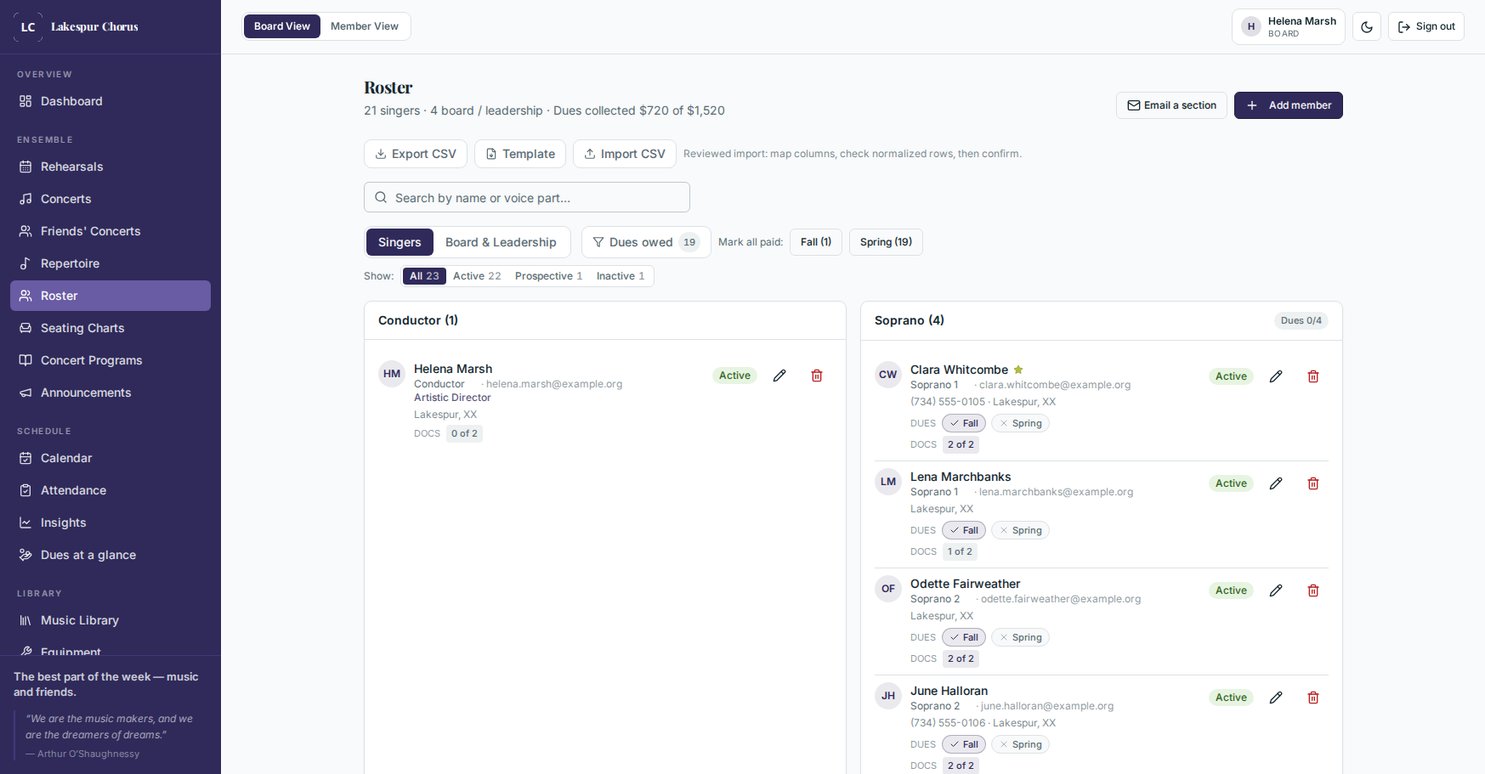
Soprano, Alto, Tenor and Bass, each with its splits: Soprano 1 and 2, Alto 1 and 2, Tenor 1 and 2, Baritone, Bass 1 and 2. The roster, attendance and section email all group by them.
For community choruses
Rehearsal Letter speaks chorus. Singers sign up by voice part, section leaders look after their own section, and the riser chart, the music library and the printed program all use the words your director already uses. Under your own name, colors and web address.
One-time setup $1,500 $750 for ensembles that sign on by December 31,
then from $360 a year based on the number of active singers.
Built for voice parts
Chorus mode is switched on once, at setup. From then on every page that groups people does it by voice part, and the screens your singers and your board see use the words a chorus already uses: singers, sections, voice parts and risers.
Soprano, Alto, Tenor and Bass, each with its splits: Soprano 1 and 2, Alto 1 and 2, Tenor 1 and 2, Baritone, Bass 1 and 2. The roster, attendance and section email all group by them.
An alto section leader sees and emails the altos, and nobody else. The conductor and accompanist are roles, not sections anyone leads.
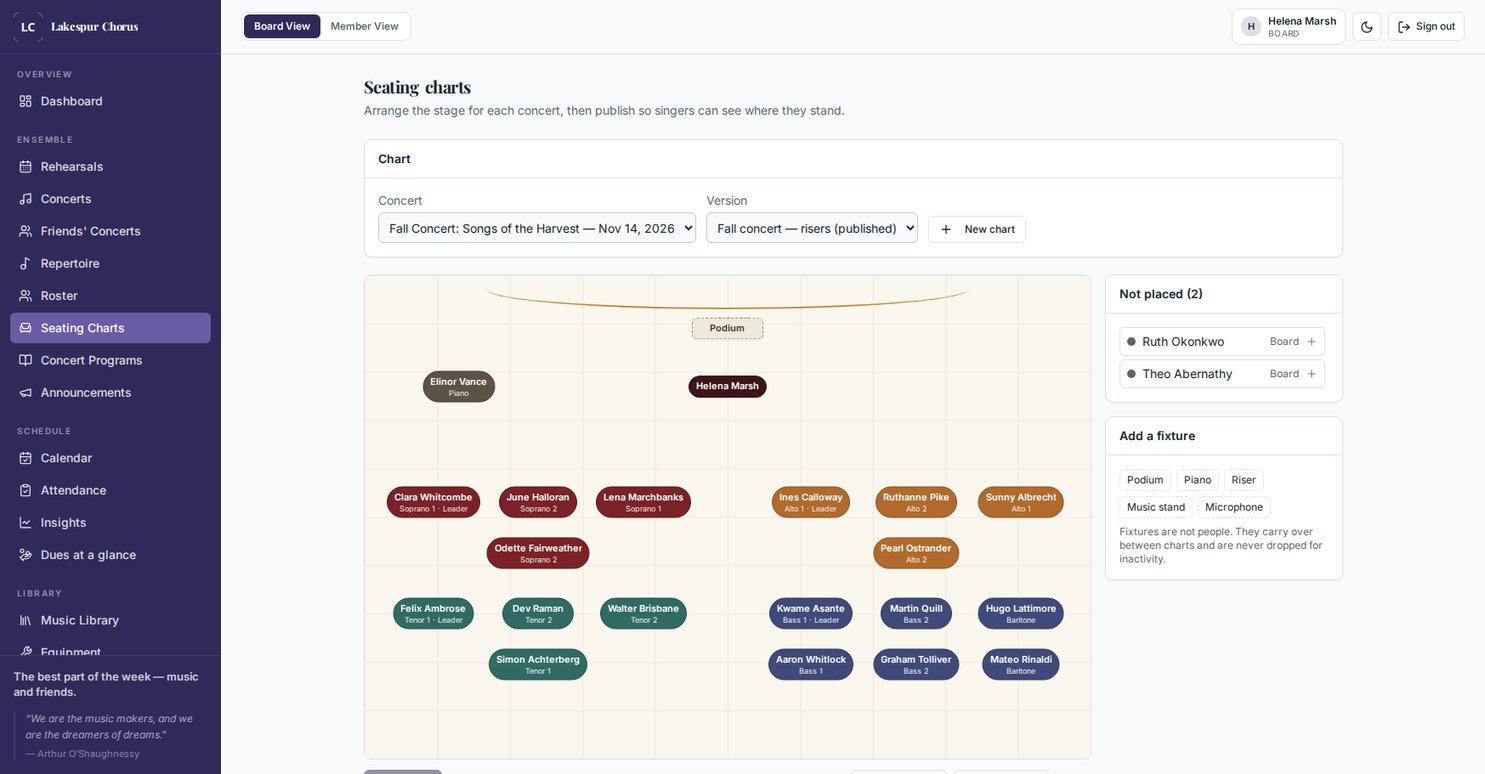
Arrange the chorus on the risers for each concert, colored by section, with leaders marked. Publish it and each singer sees where they stand.
New singers choose a voice part, or “Not sure yet”, and arrive in Recruitment ready for the director to place after hearing them.
Genres a chorus files by: Sacred, Major work, Spiritual & Gospel, A cappella, Contemporary choral, Folk song setting, Holiday and Broadway & Film, with whether each title was bought or rented and what it cost.
Equipment tracks the robe closet, the folders, the risers and the keyboard, with who has what on loan and which items are insured.
The screens
These are from a working demo for a fictional chorus, the Lakespur Chorus, in its own colors. Yours would carry your name and your colors.
The other half of the job
Most choral tools are built around rehearsal: parts, attendance, the concert calendar. Rehearsal Letter does those, and then carries the work a volunteer board does between rehearsals, so it is still there when the board turns over.
Plainly
We would rather say this here than forty minutes into a walkthrough. If one of these describes your chorus, a different tool is a better use of the money, and we will say so on the call.
Practice recordings live wherever you keep them now, such as Google Drive or Dropbox, and are linked from Documents for the whole chorus. There is no built-in player or per-part track library.
Announcements and rehearsal changes go out by email and sit on the portal. There is no texting and no phone app to install. If a text the night before is how your chorus runs, choose a tool that sends one.
We keep the ledger and link out to whatever you already use to take payment. We do not sit between your chorus and its money. If online payment is the requirement, choose a tool that processes it directly.
A small chorus without money moving through it will not recover a setup fee. Start with a free tool and come back when the roster or the paperwork grows.
Setup runs about two weeks because a person does it. If the concert is Saturday and the roster is on fire, a self-serve tool with a free trial will get you further this week than we will.
Then the spreadsheet is free and it works. The question worth asking is what happens in the season after that person steps down — but if the answer is comfortable, keep the money.
What is left, after all of that, is a narrow description: a chorus with a real board, real dues, real donors and a roster large enough that losing track of it costs something — and nobody with a free weekend to rebuild the whole apparatus. That is who this is for.
Next step
Half an hour, no obligation. We'll walk your board through a working deployment and tell you plainly whether Rehearsal Letter fits how your ensemble already runs. Pick a time that suits you — evenings and Saturdays included.